Sustainable Design
ReFlex
ReFlex is a medical assistive prosthetic arm designed for affordability and sustainability. Built through digital fabrication using recycled and biodegradable PHA polymers, it replaces high-cost conventional materials with a modular, repairable system. The 3D-scanned fit and mechanical claw provide reliable everyday function, while circular material use and local manufacturability make prosthetic access more scalable for wider communities.
Year :
2025
Industry :
Medical Design
Project Duration :
8 weeks

Problem :
Prosthetic devices can be expensive, difficult to access and heavily dependent on centralized manufacturing. Custom fitting, specialized production and replacement parts can further increase cost and complexity.

Solution :
Reflex explores a body-powered prosthetic system designed around digital fabrication, local micro-manufacturing, repairable components and reduced material waste to improve accessibility, affordability and sustainability.


Research Insights
01. Fit is Individual
Residual limbs vary in shape, size and movement, making comfort and fit central to prosthetic design.
02. Simplicity Improves Repairability
Body-powered mechanisms reduce dependence on motors, electronics and specialized components.
03. Digital Fabrication Enables Local Production
3D scanning and printing can support small-scale, localized manufacturing instead of centralized production.
04. Materials Shape Performance
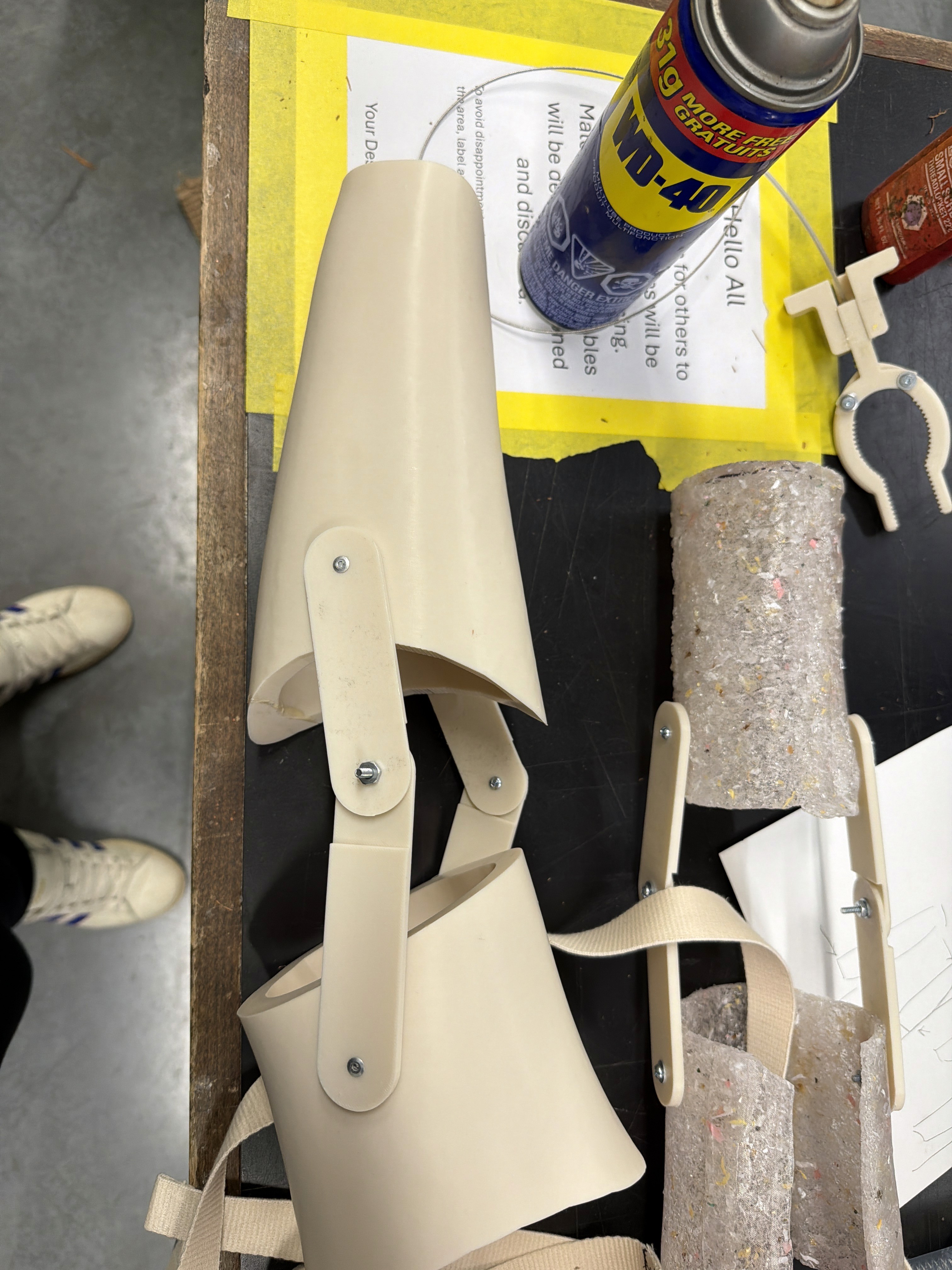
Testing recycled PETG and PHA showed that material choice directly affects strength, tolerances, movement and manufacturability.

Recycled PETG
The alginate mould was used as the basis for forming recycled PETG. The material was granulated, heated and moulded to explore a low-tech, locally reproducible fabrication process using recovered plastic.


All PHA Bio-Plastics
The 3D scan was translated into a digital model and refined for fabrication. The final geometry was then 3D printed in all-PHA bioplastic, allowing greater control over fit, form and functional integration.

Final Design
Reflex is a body-powered upper-limb prosthetic concept developed around accessible fabrication, adaptable fit and simplified construction.
The final design combines a digitally captured body interface with a 3D printed PHA structure, creating a lightweight system that can be produced through localized fabrication methods and adjusted to individual users.
More Projects


Sustainable Design
ReFlex
ReFlex is a medical assistive prosthetic arm designed for affordability and sustainability. Built through digital fabrication using recycled and biodegradable PHA polymers, it replaces high-cost conventional materials with a modular, repairable system. The 3D-scanned fit and mechanical claw provide reliable everyday function, while circular material use and local manufacturability make prosthetic access more scalable for wider communities.
Year :
2025
Industry :
Medical Design
Project Duration :
8 weeks
Problem :
Prosthetic devices can be expensive, difficult to access and heavily dependent on centralized manufacturing. Custom fitting, specialized production and replacement parts can further increase cost and complexity.
Solution :
Reflex explores a body-powered prosthetic system designed around digital fabrication, local micro-manufacturing, repairable components and reduced material waste to improve accessibility, affordability and sustainability.
Research Insights
01. Fit is Individual
Residual limbs vary in shape, size and movement, making comfort and fit central to prosthetic design.
02. Simplicity Improves Repairability
Body-powered mechanisms reduce dependence on motors, electronics and specialized components.
03. Digital Fabrication Enables Local Production
3D scanning and printing can support small-scale, localized manufacturing instead of centralized production.
04. Materials Shape Performance
Testing recycled PETG and PHA showed that material choice directly affects strength, tolerances, movement and manufacturability.
Recycled PETG
The alginate mould was used as the basis for forming recycled PETG. The material was granulated, heated and moulded to explore a low-tech, locally reproducible fabrication process using recovered plastic.
All PHA Bio-Plastics
The 3D scan was translated into a digital model and refined for fabrication. The final geometry was then 3D printed in all-PHA bioplastic, allowing greater control over fit, form and functional integration.
Final Design
Reflex is a body-powered upper-limb prosthetic concept developed around accessible fabrication, adaptable fit and simplified construction.
The final design combines a digitally captured body interface with a 3D printed PHA structure, creating a lightweight system that can be produced through localized fabrication methods and adjusted to individual users.
More Projects
Sustainable Design
ReFlex
ReFlex is a medical assistive prosthetic arm designed for affordability and sustainability. Built through digital fabrication using recycled and biodegradable PHA polymers, it replaces high-cost conventional materials with a modular, repairable system. The 3D-scanned fit and mechanical claw provide reliable everyday function, while circular material use and local manufacturability make prosthetic access more scalable for wider communities.
Year :
2025
Industry :
Medical Design
Project Duration :
8 weeks
Problem :
Prosthetic devices can be expensive, difficult to access and heavily dependent on centralized manufacturing. Custom fitting, specialized production and replacement parts can further increase cost and complexity.
Solution :
Reflex explores a body-powered prosthetic system designed around digital fabrication, local micro-manufacturing, repairable components and reduced material waste to improve accessibility, affordability and sustainability.
Research Insights
01. Fit is Individual
Residual limbs vary in shape, size and movement, making comfort and fit central to prosthetic design.
02. Simplicity Improves Repairability
Body-powered mechanisms reduce dependence on motors, electronics and specialized components.
03. Digital Fabrication Enables Local Production
3D scanning and printing can support small-scale, localized manufacturing instead of centralized production.
04. Materials Shape Performance
Testing recycled PETG and PHA showed that material choice directly affects strength, tolerances, movement and manufacturability.
Recycled PETG
The alginate mould was used as the basis for forming recycled PETG. The material was granulated, heated and moulded to explore a low-tech, locally reproducible fabrication process using recovered plastic.
All PHA Bio-Plastics
The 3D scan was translated into a digital model and refined for fabrication. The final geometry was then 3D printed in all-PHA bioplastic, allowing greater control over fit, form and functional integration.
Final Design
Reflex is a body-powered upper-limb prosthetic concept developed around accessible fabrication, adaptable fit and simplified construction.
The final design combines a digitally captured body interface with a 3D printed PHA structure, creating a lightweight system that can be produced through localized fabrication methods and adjusted to individual users.